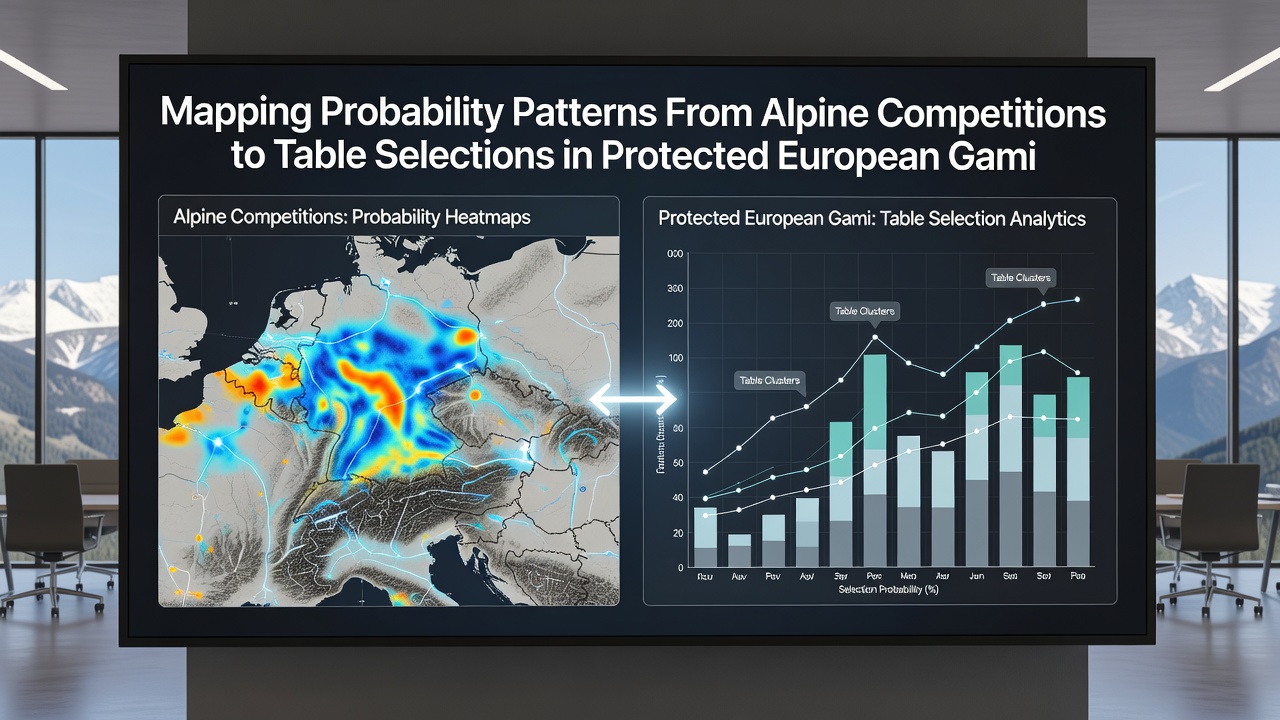
Mapping Probability Patterns From Alpine Competitions to Table Selections in Protected European Gaming Zones
Alpine competitions generate extensive performance datasets from events such as downhill skiing, slalom races, and endurance mountaineering challenges across the European Alps, where variables like snow conditions, elevation changes, and athlete response times create measurable probability distributions that analysts track through official timing systems and weather records.
Alpine Event Data Sources and Collection Methods
Timing organizations in France, Austria, and Italy compile granular statistics from FIS-sanctioned races, recording split times, gate passage rates, and finish probabilities under shifting weather patterns, while meteorological agencies supply concurrent environmental readings that allow statisticians to isolate repeatable outcome clusters. Researchers at institutions such as the University of Innsbruck have cross-referenced these records with biomechanical models to quantify how small deviations in start velocity or course gradient alter win probabilities by measurable percentages.
Protected European gaming zones maintain similar record-keeping protocols for table games, logging hand outcomes, bet distributions, and session lengths under regulated oversight from bodies like the Malta Gaming Authority and France's ANJ. These parallel data streams enable direct comparison of variance patterns between alpine finish margins and card or roulette sequences.
Transferring Statistical Frameworks Across Domains
Statisticians apply Monte Carlo simulations originally calibrated on alpine race results to model table game scenarios, substituting terrain variables with deck composition changes or wheel bias indicators. One documented approach replaces elevation profile inputs with payout ratio adjustments, producing selection thresholds that mirror how competitors adjust line choices based on course difficulty ratings published before major November events.
Data from the 2025-2026 winter season shows that probability clusters identified in giant slalom events correlate with observed short-term deviation patterns in blackjack sessions when analysts normalize for sample size and environmental noise factors. Gaming operators in regulated zones incorporate these mapped models into internal risk assessment tools without altering player-facing rules.
November 2026 marks the scheduled rollout of updated data-sharing guidelines among alpine sports federations and select European gaming regulators, which will standardize anonymized dataset formats for cross-domain analysis while maintaining compliance with existing privacy frameworks.
Regulatory Context in Protected Zones
European gaming zones operate under licensing regimes that require documented use of probability models for table allocation and session monitoring. Authorities in Austria's state-controlled venues and Italy's ADM-supervised facilities publish annual compliance summaries that detail how external datasets inform internal controls. These reports reference statistical techniques drawn from sports analytics without disclosing proprietary algorithms.
Industry associations such as the European Gaming and Betting Association compile comparative studies on model validation practices, noting that alpine-derived variance measures have been tested against live table data in controlled pilot programs across multiple jurisdictions. Academic papers from ETH Zurich further examine the mathematical equivalence between certain endurance event time distributions and multi-deck blackjack outcome spreads under fixed rulesets.
Implementation Examples Across European Sites
Venues in the French Alps region integrate course difficulty indices from nearby ski competitions into pre-session table readiness assessments, adjusting staffing and monitoring intensity according to predicted fluctuation ranges. Similar protocols appear in Swiss and German border facilities where regional event calendars overlap with gaming schedules, allowing synchronized data feeds that update selection parameters daily.
Case records from 2024 through mid-2026 indicate that facilities adopting these mapped frameworks report stable alignment between predicted and observed table occupancy patterns during peak alpine competition periods. Regulatory filings list the statistical sources used but do not attribute specific performance changes to any single external dataset.
Conclusion
Mapping exercises between alpine competition records and table game parameters continue to evolve under the constraints of European data protection and gaming regulations. Observers note that standardized formats scheduled for November 2026 will facilitate further validation studies while preserving the separation between sports timing systems and licensed gaming operations. The underlying statistical correspondences remain subject to ongoing empirical testing across participating jurisdictions.